Showing posts with label Aryan Khan. Show all posts

Saturday, March 28, 2026

My girlfriend’s new photo, officially published by Aryan Khan.

My girlfriend’s new photo, officially published by Aryan Khan.


Copyright © 2026 Aryan Khan (Elite News BD). All rights reserved.

This image constitutes the intellectual property of Aryan Khan and is fully protected under applicable U.S. and international copyright laws, including the Digital Millennium Copyright Act (DMCA).

Any unauthorized use, reproduction, distribution, display, modification, or republication of this image, in whole or in part, without prior written consent from the copyright owner, is strictly prohibited.

Unauthorized usage will result in immediate enforcement actions, including but not limited to DMCA takedown notices, account termination requests, and potential legal proceedings for damages and injunctive relief.

My girlfriend’s new photo, officially published by Aryan Khan.


Thursday, July 10, 2025

My New Trading Ai Bot By Aryan Khan

My New Trading Ai Bot By Aryan Khan


© 2025 Aryan Khan – All Rights Reserved.

Original Creator: Aryan Khan
Official Website: https://www.elitenewsbd.com

This video was originally published on this website. Any re-upload, reproduction, or distribution of this video on TikTok, Facebook, YouTube, or any other platform without permission is strictly prohibited.

If this content appears elsewhere without authorization, please report it.

Copyright Owner Contact:
copyright@elitenewsbd.com

Thursday, May 15, 2025

My Best Trick For Trading Thumbnail

My Best Trick For Trading Thumbnail


© 2025 Aryan Khan – All Rights Reserved.

Original Creator: Aryan Khan
Official Website: https://www.elitenewsbd.com

This video was originally published on this website. Any re-upload, reproduction, or distribution of this video on TikTok, Facebook, YouTube, or any other platform without permission is strictly prohibited.

If this content appears elsewhere without authorization, please report it.

Copyright Owner Contact:
copyright@elitenewsbd.com

Thursday, July 25, 2024

PRINCE MAMUN Exposed: The Truth Behind the Leaked Footage – Hoax or Reality? | Aryan Khan Exclusive

PRINCE MAMUN Exposed: The Truth Behind the Leaked Footage – Hoax or Reality? | Aryan Khan Exclusive

Author: Aryan Khan
Published on: 07/26/2024 9:00 AM
Website: Elite News BD


                                                                                      Published By Aryan Khan
🧠 What's Really Happening with Prince Mamun?

Social media has exploded with controversy surrounding Prince Mamun. Alleged leaks, emotional videos, and private images have gone viral — but are they real or fabricated?

📸 Leaked Visuals: Truth or Trick?

Some of the viral content includes sensitive-looking images and clips. But after close inspection, many inconsistencies appear — including lighting differences, timestamp mismatches, and possible editing. This raises a serious question: Is this another deepfake drama?

📊 Public Reaction

Fans are divided — some defend Mamun strongly, while others believe the worst. As with many viral events, people often react before knowing the facts. That's why we're breaking it down with clarity and objectivity.

🧩 Our Analysis

  • 🚫 No official statement from Prince Mamun has been released
  • ⚠️ Some materials appear edited or manipulated
  • 🛑 No verified sources confirm the authenticity of the leaks

✅ Final Verdict

Until more evidence or official clarification comes forward, the claims should be treated as unverified. Elite News BD stands for responsible reporting — not viral chaos. Stay tuned for more updates as this story develops.


🔐 Thumbnail & Copyright Notice

The thumbnail used in this post was professionally designed by Aryan Khan exclusively for Elite News BD. This visual is protected under DMCA copyright law. Any unauthorized use on YouTube, Facebook, or other platforms will result in immediate copyright strikes and takedown actions.

📩 To Report Infringement:

If you find this thumbnail reused without permission, please contact us directly at: copyright@elitenewsbd.com
Or report directly to the hosting platform using a DMCA complaint.

📢 Stay Connected:

  • 🌐 www.elitenewsbd.com
  • 📧 Email: admin@elitenewsbd.com
  • 📸 Follow for more exclusive updates!

Saturday, January 13, 2024

Tuesday, September 12, 2023

সমুদ্রপৃষ্ঠ থেকে ৩৬৫০ মিটার উঁচুতে অক্সিজেনের জন্য হাপিত্যেশ আর্জেন্টিনার খেলোয়াড়দের

সমুদ্রপৃষ্ঠ থেকে ৩৬৫০ মিটার উঁচুতে অক্সিজেনের জন্য হাপিত্যেশ আর্জেন্টিনার খেলোয়াড়দের


লা পাজ—বলিভিয়ার অন্যতম এই রাজধানী শহর আন্তর্জাতিক ফুটবলে অনেক পরাশক্তি দলের কাছেই আতঙ্কের এক নাম। সমুদ্রপৃষ্ঠ থেকে ৩৬৫০ মিটার ওপরে অবস্থিত এ শহরে বাইরের দেশ থেকে হঠাৎ যাওয়া মানুষদের জন্য স্বাভাবিকভাবে চলাফেরা করাই কঠিন ব্যাপার। এর ওপরে ৯০ মিনিট ফুটবল খেলা কেমন হবে, তা শুধু অনুমানই করা যায়!

সমুদ্রপৃষ্ঠ থেকে অনেক উঁচুতে বলে লা পাজে অক্সিজেনের সমস্যা আছে। তাই অল্প পরিশ্রম করলেই সেখানে মানুষ ক্লান্ত হয়ে যায়। এ কারণেই বলিভিয়ায় খেলতে যাওয়া দলগুলোর খেলোয়াড়দের বেশ সমস্যাই পোহাতে হয়।

Friday, September 1, 2023

Arch rivals India, Pakistan to lock horn in Asia Cup today

Arch rivals India, Pakistan to lock horn in Asia Cup today


The eternal rivals India and Pakistan will take centre stage in the Group A encounter of Asia Cup 2023 on Saturday at the Pallekele Cricket Stadium. The India vs Pakistan clash in the Asia Cup is undoubtedly one of the most anticipated and intense matchups in cricket. The historical rivalry between these two cricketing giants adds an extra layer of excitement to the tournament. 

Whenever both teams have clashed, fans have been kept at the edge of their seats and one can expect the same in the upcoming encounter. India are studded with matchwinners and they would look to put up a complete performance on Saturday. However, they would count on veteran players such as captain Rohit Sharma and Virat Kohli to do the heavy lifting with the bat in the high-voltage game. On the bowling front, the duo of Mohammed Shami and Jasprit Bumrah will be entrusted to work in tandem and create havoc with the ball. It will be India's tournament opener; they would be eager to kick-start their campaign with a win.

Pakistan on the other hand are entering the game in high spirits, having hammered Nepal by 238 runs in the inaugural game of Asia Cup 2023. Skipper Babar Azam and Iftikhar Ahmed were at their best and smashed blistering centuries. Then the bowling unit breathed fire to register an emphatic win. The Men in Green would look to replicate the performance in the high-profile clash against India and seal a spot in the Super Fours round.

India and Pakistan have battled it out on the cricket field on 132 occasions in One-Day Internationals and the Men in Blue have stood tall on 55 occasions. Pakistan on the other hand, have won 73 times in the 50-over format.

The contest between Rohit Sharma and Shaheen Afridi would be one of the most enthralling battles in the marquee clash. Rohit Sharma is known to struggle against leftarm pacers and Shaheen Afridi has also dismissed the Indian skipper on a number of occasions in white-ball cricket. It will be interesting to see who comes out on top this time around.

The showdown between India and Pakistan has always been more than simply a cricket match; it's a collision of cultures, emotions, and national pride. Both teams have a long history of heated rivalry, and every meeting between them is regarded as a historic occasion. The India vs Pakistan match promises to be an exciting spectacle that cricket fans will not want to miss.

Najmul Hossain Shanto of Bangladesh plays a shot against Sri Lanka in their One Day International match of the Asia Cup 2023 at the Pallekele International Cricket Stadium in Sri Lanka on Thursday. Shanto top-scored with 89 runs.

Najmul Hossain Shanto of Bangladesh plays a shot against Sri Lanka in their One Day International match of the Asia Cup 2023 at the Pallekele International Cricket Stadium in Sri Lanka on Thursday. Shanto top-scored with 89 runs.


Najmul Hossain Shanto of Bangladesh plays a shot against Sri Lanka in their One Day International match of the Asia Cup 2023 at the Pallekele International Cricket Stadium in Sri Lanka on Thursday. Shanto top-scored with 89 runs.


Pakistan ready for India: Babar

Pakistan ready for India: Babar


block

Agency :
Pakistan captain Babar Azam is confident and said they are prepared for the ‘high intensity’ match against arch-rival India.

Pakistan sealed an outstanding 238-run win against Nepal in the Asia Cup opener as skipper Babar smashed a 131-ball 151 for his 19th ODI hundred while Ifthikhar Ahmed scored an unbeaten 109 in 71 balls.

Then, Shadab Khan picked up four wickets and pace duo Haris Rauf and Shaheen Shah Afridi each took two wickets to skittle out Nepal on 104 runs.

After the match, Babar said he was satisfied with the match result and it was a good preparation for the side ahead of the big clash against India.

“This game was good preparation for the India game because it gave us confidence.

block

India-Pakistan will always bring high intensity.

We want to give 100% in every match, hope to do that there as well,” said Babar.

Pakistan will now fly to Pallekelle for the second group-stage match and Babar also lauded batter Ifthikar for his splendid performance.

“Iftikhar also played a great innings when he came on.

When he came in, I told him to play his natural game and he was comfortable after hitting two or three boundaries,” he added.

Global food crisis and challenges

Global food crisis and challenges


— Observer Research Foundation

WARS have disrupted agriculture throughout history. But the nature of Russia’s war in Ukraine, a war between two agricultural production powerhouses in the context of globalised agricultural markets, presents never-before-seen consequences for global agriculture and food security. Nine months into the war, the contours of these consequences are clear: exports from Ukraine have reduced, future harvests are in question, global prices of agriculture commodities have spiked, and most exposed are the countries that rely on agricultural exports from Ukraine and Russia to feed their citizens or on fertiliser from Russia and Belarus to produce their own food. What can we expect in the coming months? What are the lessons for policymakers?

Global agricultural markets have endured supply-side shocks and price spikes before. In 2007 and 2008, concurrent droughts in multiple food-exporting countries, food export bans by many more, and high energy prices caused the nominal price of food to double, according to the Food and Agriculture Organization. Global undernourishment may have reached a 15-year high in 2020 due to the continued effects of climate change and regional conflict, on top of the economic and supply chain shocks caused by the Covid pandemic. There is a positive link between food security and stability. Conversely, especially in a globalised era, armed conflicts can be a key driver of food insecurity that affects regions beyond the battlefield; the food crises of the past decade have laid bare the systemic challenges in fending off food insecurity in conflict settings.


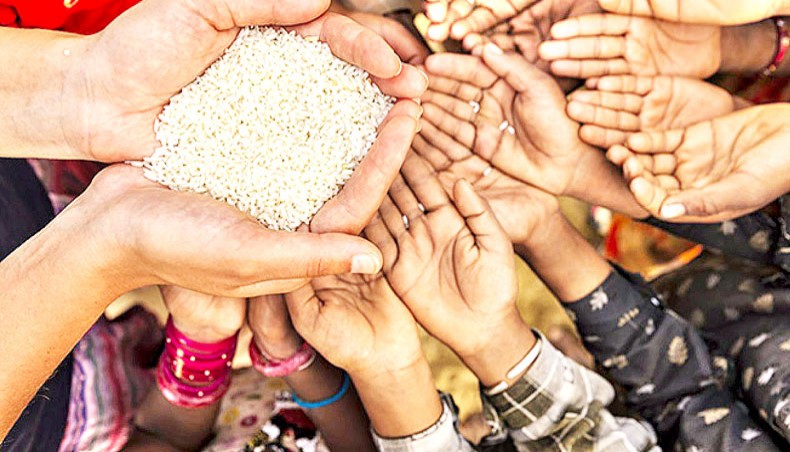
These crises reveal why governments or belligerents lack either the capacity or the will to address them and why humanitarian aid struggles to reach people in need. The current Russia-Ukraine war has both created new food insecurity and highlighted existing systemic weaknesses in international food security. Our fragile world is facing an impending global food crisis. As extreme weather and drought collide with the impact of the pandemic, war, and rising inflation, more and more people are facing food insecurity. Here is how we are mobilising to meet the need. Food insecurity has been rising since 2018. Even before Russia’s invasion of Ukraine, the increasing frequency and severity of climate shocks, regional conflicts and the pandemic were all taking their toll, disrupting food production and distribution and driving up the cost of feeding people and families.

The situation took an even more dramatic turn with the war in Ukraine. This pushed the prices of food and fertilisers higher, hurting importers and prompting several countries to impose export restrictions. For the global food supply chain, there are few worse countries to be at war with than Russia and Ukraine. Together, the two provide almost 30 per cent of the world’s wheat, plus barley, sunflower seed oil and corn, feeding billions of people. This war is tipping our fragile world toward mass hunger. Meanwhile, Russia and Belarus are two of the world’s top producers of potash, an ingredient in fertiliser. Farmers worldwide are affected. So with Russia’s exports blocked by many countries and Ukraine’s planting season impacted by the fighting, a huge supply of the world’s food is trapped or disrupted.

According to the World Bank, this hits poor and low-income countries hardest as they depend on food imports the most. Food has suddenly become very expensive. Trips to the supermarket and the gas station cost a lot more, up to one-third and two-thirds more, according to the United Nations. The Russia-Ukraine war is worsening this inflation, making it even harder to get food at a decent price. With families in emerging economies spending an average of 25 per cent of their budgets on food, rising to 40 per cent in sub-Saharan Africa and 60 per cent in Haiti, the rising cost of living could place households with children in life-or-death situations. Food price increases are having devastating effects on the poorest and most vulnerable, says World Bank Group president David Malpass.

Around 30 per cent people in Bangladesh are facing food scarcity, though the country’s economy has recovered from the shocks caused by the pandemic. The number of people who went to sleep hungry almost doubled to 13 per cent in May this year from 7 per cent in June last year, according to the survey. The Bangladesh Institute of Development Studies said, about 6 per cent of the people surveyed in May this year said they could not buy food. The figure was 5 per cent in June last year. The number of people who didn’t eat for 24 hours rose to 2 per cent in May this year from 1 per cent in June last year, the survey said. However, there has been a significant decrease in the number of people who ate smaller meals over the last year. It fell to 9 per cent in May this year from 17 per cent in June last year. Presenting the keynote, Ayago Wambile said, price increases are reported as a key challenge and impediment to food security.

Food insecurity has heightened the vulnerability of the most food-insecure regions, including the countries in the poorest areas. The WB survey said food security for 70 per cent of Bangladesh’s population has not changed in one year since June 2021. The country’s economy has seen a V-shaped recovery in the last two years since the onset of the Covid pandemic but the recovery was uneven, as people from all levels failed to get the result of such a recovery. A Frequency Phone Survey was conducted at 10 different times between June 2020 and May 2022. It was carried out at the national level as well as in urban and slum areas of Dhaka, Chattogram and Cox’s Bazar. The sample size ranged from 1,300 to 7,700 people.

According to the study, during the time since the onset of the pandemic in June 2020, 31 per cent of people were unable to get Tk 25,000 in cash in case of an emergency. The number fell to 4 per cent in May this year. Also, the population faces difficulties getting emergency cash in times of crisis. In developed countries, the state ensured cash assistance for people. Referring to the study’s findings, he said the country’s economy suffered during the lockdowns. It gradually bounced back, but everyone didn’t equally reap the benefits of the recovery. In his presentation, Wambile said 55 per cent of people in slum areas were unable to pay rent in June 2020, while that number came down significantly to 25 per cent in May this year. According to the study, 22 per cent of tenants in slum areas feared eviction by house owners in June 2020. The number dropped to 14 per cent in May this year, mentioning that the country’s vulnerability to economic shocks has risen.

About nine months of fighting between Russia and Ukraine, two farming powerhouses, has plunged a teetering global food system into full-blown catastrophe, leaving millions of people facing starvation. The war is exacerbating a crisis already fueled by climate change, soaring costs of living and a fertiliser price hike that is creating the most acute global food crisis in decades. A UN-brokered agreement to reopen the Black Sea for food ships may not be enough to bring relief to the millions of people struggling to eat across Africa, Asia and the Middle East. Humanitarian agencies are scrambling to prepare themselves for even more critical levels of hunger as they face a €14 billion annual gap in food security spending, according to a 2020 report by Ceres 2030, also a think tank. Moscow’s war in Europe’s breadbasket has severely rocked global food markets, forcing humanitarian agencies to slash food rations in countries like Yemen.

Thirty-six countries rely on Ukraine and Russia for more than half of their wheat imports. A special UN crisis task force is monitoring more than 60 countries that are struggling to pay for food imports. High energy prices and volatility in the food markets have put extra pressure on cash-strapped developing countries. As more people grow hungry globally, the UN goal to end hunger by the end of the decade looks further away than ever. Drought is gripping the Horn of Africa, leaving some 26 million people facing food shortages in Kenya, Ethiopia and Somalia over the next six months. More than 7 million livestock animals have already been wiped out. Across East Africa as a whole, some 50 million people are facing acute food insecurity. Seven years ago, world leaders committed to a highly ambitious target: ending hunger by 2030.

That goal is now more distant than ever. The United Nations estimates that the number of people in hunger emergencies, one step away from famine, has jumped from 135 million in 2019 to 345 million. The UN humanitarian chief recently warned that famine is at the door in Somalia. Across the drought-ravaged Horn of Africa, 22 million people are at risk of starvation. Pakistan suffered a massive deluge, and as much as four-fifths of its livestock died. In southern China, drought and a heatwave are putting crops at risk. These follow Russia’s invasion of Ukraine, which affected supplies from two major exporters and sent energy and fertiliser prices soaring. The UN World Food Programme’s chief economist has noted that the war itself did not create the crisis but rather put a lot of fuel on an already burning fire.

Multiple conflicts and climate shocks were already having an impact when the pandemic hit. Though its effects on food production were not as severe as many had feared, it depleted reserves and many countries have not recovered. It looks highly likely that 2023 will be worse. Two-thirds of those affected by hunger last year were women, with the food security gap between women and men multiplying since 2018. The UN stresses that at the moment, the issue is not supply but access and affordability. Globally, prices have risen by about 20 per cent year-on-year (while food inflation stands at 33 per cent in Iran and a staggering 122 per cent in Lebanon). But production is an increasing concern. Fertiliser prices have soared by as much as 300 per cent in some countries in Africa; wars and extreme weather are disrupting planting for next year’s crops.

The causes of today’s global agriculture commodity price shocks are not unexpected. In the 2015 Intelligence Community Assessment on Global Food Security, the US Intelligence Community noted that large exportable supplies of key components of food production, such as phosphates, potash, and fuel oil come from states where conflict or government actions could cause supply chain disruptions that lead to price spikes. In the years to come, climate change, extreme weather, conflict, diseases, resource constraints, and environmental degradation will continue to suppress agricultural production, with isolated or global effects. In their responses to today’s global food crisis, policymakers would be wise to consider establishing mechanisms with staying power so that the next time supplies fall and prices spike, they will not need to invent solutions from scratch.


Rayhan Ahmed Topader is a researcher and columnist.

Toxins in food chain in Bangladesh keep taking toll on human

Toxins in food chain in Bangladesh keep taking toll on human


The mounting evidence of heavy metals and other toxins entering the food chain and accumulating in human bodies brought attention to the authorities’ continued apathy towards the growing food hazards in Bangladesh.

 Food and health experts said that public health faced its biggest threat from what should have been a life-sustaining action - eating - because authorities allowed foods to turn toxic in exchange for urbanisation and industrialisation.


 Public and independent researchers have repeatedly found evidence of widespread pollution in the air, water, and soil, frequently with heavy metals like lead, chromium, cadmium, and arsenic, industrial chemical waste, pollutants emitted by burning fossil fuels, and agricultural inputs - often found in foods beyond permissible limits, from staple rice to drinking water to cow milk.

Instead of comprehensively assessing the threat of food safety hazards, especially to people belonging to different age groups and with varying health conditions, food experts alleged that authorities had repeatedly dismissed findings from scientific studies, labelling independent researchers as agents of foreign food companies.

 ‘The government must appreciate researchers and their findings rather than chasing them for exposing uneatable foods,’ said Romen Raihan, a food safety researcher, who teaches Public Health and Informatics at Bangabandhu Sheikh Mujib Medical University.

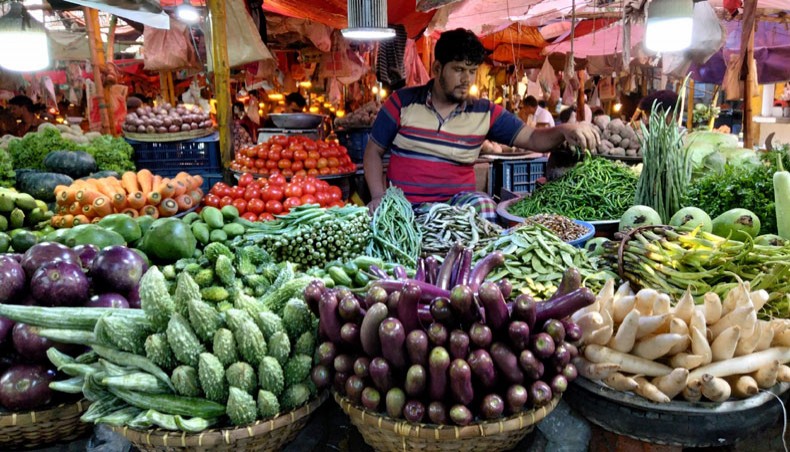
Romen’s comment came on the heels of the media witch-hunt targeting one of the researchers, who revealed in a study in August that all of their studied 80 brinjals contained lead and that cadmium was also detected in 40 per cent of the samples at levels several hundred times higher than what is permissible for oral ingestion of the vegetable by the US Environmental Protection Agency.

Three journalists in a television talk show accused the researcher, who teaches Agricultural Chemistry at the Bangladesh Agricultural University, of endangering farmers’ livelihoods through his study, opining that the research constituted ‘criminal offence’.

The study, published in the Scientific Reports journal, concluded that impurities present in the brinjal put its consumers at higher cancer risk and that the impurities were passed from soil polluted with lead, zinc, cadmium, nickel, and copper.

The three talk-show participants even saw an ulterior motive in the researcher picking up brinjal for his study and no other crops or vegetables.

In 2019, a social media campaign was launched against an independent researcher at Dhaka University after he made public the presence of multiple antibiotics in prominent brands of pasteurised milk.

The social media campaign, mainly run by government officers responsible for looking after food standards and safety, accused the  researcher of being an agent of international dairy companies.

The DU researcher, who teaches Pharmaceutical Technology and is known as a food safety advocate, was never heard again.

Several other researchers – all public university teachers – said that they had never published their findings on rice and soil impurities, fearing backlash from the government.

‘The government must protect researchers and create an atmosphere where food safety hazards are freely discussed,’ said Romen Raihan.

Romen recently revealed, following a study, that fizzy drinks are contaminated with heavy metals such as lead and chromium at a higher level than the allowable limit recommended by WHO and Codex Alimentarius Commission.

The study, published in March in Fortune Journals, a food science and nutrition journal, said that metallic impurities such as lead and chromium in the water used for manufacturing the fizzy drinks might damage the brain and nervous system, as well as increase the risk of high blood pressure, uremia, ultimately leading to death.

‘Heavy metal mixed in water is the most dangerous form of all food impurities,’ said Mokhlesur Rahman, an Agricultural Chemistry professor at BAU.

Heavy metals are regularly detected in canned fruit juice and soft drinks, not only in those marketed domestically but also in those exported.

In 2015, following laboratory tests, the Bangladesh Council of Scientific and Industrial Research found that fruit juices sold in cans contained high concentrations of heavy metal aluminium residues alongside excessive sugar and the preservative sodium benzoate.

Food experts link the growing prevalence of non-communicable diseases in Bangladesh largely to unsafe foods, with NCDs accounting for 70 per cent of all deaths. 

UK-based academic journal The Lancet revealed in May that deaths from modern pollution risk factors such as ambient air pollution and toxic chemical pollution have gone up by 7 per cent since 2015 and by more than 66 per cent since 2000 globally.

‘Urgent attention is needed to control pollution and prevent pollution-related disease, with an emphasis on air pollution and lead poisoning, and a stronger focus on hazardous chemical pollution,’ said the Lancet.

A review of 75 scientific papers published on pollution and food safety in Bangladesh revealed in 2021 that hundred per cent of vegetables and 70 per cent of fish samples examined were lead poisoned.

The review published in September 2021 in the US-based Journal of Health and Pollution revealed that lead contamination was also found in cereals, chicken, duck eggs, cow milk and a host of other foods, adding that Bangladesh is exposed to almost all pathways of lead contamination.

The Lancet report revealed that children in Bangladesh had one of the most dangerous blood lead levels in the world in 2019 – 15 micrograms per deciliter, far above the Centers for Disease Control and Prevention reference level of 3.5 micrograms per deciliter.

Even these overwhelming volumes of evidence failed to generate a comprehensive effort to determine the extent of soil, air and water pollution.

‘We lack the capacity to undertake a massive task,’ said environment, forest and climate change secretary Farhina Ahmed, adding that testing laboratories and machinery were being imported and set up.

Food secretary Ismiel Hossain said that ensuring food safety was a combined responsibility and that they were working on it.

Agriculture minister Muhammad Abdur Razzaque avoided answering questions asked about his plans for getting rid of impurities in foods.

 ‘We are working,’ he said.

There are many ways of reducing environmental pollution, according to Abu Hena Md. Zulfiquar Ali, a professor at the soil, water and environment department, Dhaka University.

‘Nature is self-sustaining,’ he said, adding that checking pollution sources could help reduce food toxicity over time.

There are also many ways of removing heavy metals accumulated in the body, said Mohammad Gulzarul Aziz, who teaches food technology at BAU.

 73.5pc people in Bangladesh unable to afford healthy food: UN

73.5pc people in Bangladesh unable to afford healthy food: UN


Logo of the United Nations.

A total of 73.5 per cent of people are unable to afford healthy food in Bangladesh as one needs to spend $3.064 for getting required nutrition per day, according to a joint report launched by five organisations of the United Nations.

Among the eight Southern Asian countries, the report found Bangladesh the third most vulnerable country in terms of taking nutritious foods.


The global report titled ‘The State of Food Security and Nutrition in the World 2022’ was jointly prepared by the Food and Agriculture Organization, the International Fund for Agricultural Development, the United Nations Children’s Fund, the World Food Programme and the World Health Organization.

It was published on July 7 for repurposing food and agricultural policies to make healthy diets more affordable.

In Southern Asia, the percentage of people unable to take healthy food in Bhutan is 50, India 70, Iran 22.1, Maldives 1.1, Nepal 83.3, Pakistan 81.2 and Sri Lanka 45.3, said the report that covered all UN members.

A total of 11.98 crore people in Bangladesh could not afford a healthy diet in 2019 and the number rose to 12.11 crore in 2020, showing a rising trend of people in this category.

The challenges to ending hunger, food insecurity and all forms of malnutrition keep growing as the number of people who could not afford a healthy diet in 2020 increased globally and in every region in the world, said the report.

Almost 3.1 billion people across the globe could not afford a healthy diet in 2020. This is 112 million more than in 2019, reflecting the inflation in consumer food prices stemming from the economic impacts of the COVID-19 pandemic and the measures put in place to contain it, according to the report.

The increase was mainly driven by Asia, where 78 million more people were unable to afford this diet in 2020, followed by Africa (25 million more people), while Latin America and the Caribbean and Northern America and Europe had 8 and 1 million more people, respectively.

‘The Covid-19 pandemic has further highlighted the fragilities in our agrifood systems and the inequalities in societies, driving further increases in world hunger and severe food insecurity,’ the report added.

This number could even be greater once data are available to account for income losses in 2020.

The ongoing war in Ukraine is disrupting supply chains and further affecting prices of grain, fertilizer and energy.

In the first half of 2022, it resulted in further food price increases. At the same time, more frequent and severe extreme climate events are disrupting supply chains, especially in low-income countries, observed the report.

This report repeatedly highlights the intensification of these major drivers of food insecurity and malnutrition: conflict, climate extremes and economic shocks combined with growing inequalities.

Former World Bank Dhaka office chief economist Zahid Hussain told New Age that the major reasons behind people being unable to get healthy food was financial constraints due to the income loss during the Covid-19 pandemic, rising inequalities in society and inflation.

‘The government had increased the duty on imported fruits to tackle the foreign exchange reserve resulting in the increase in the price. Poor and low-income people are unable to take food, considered as one of the nutritious food,’ he added.

He also blamed the change in food habits among the younger generation, dependency on commercial food and the use of fertiliser to increase the productivity of crops at the expense of quality for people taking less nutritious food. 

Dhaka University Institute of Nutrition and Food Science professor Md Saidul Arefin said that if one failed to maintain a healthy diet, he or she would suffer from malnutrition in the coming days.

‘Many people will suffer from heart, kidney and cancer diseases due to lack of healthy food intake,’ he said.

He mentioned that if a woman was unable to afford nutritious food during the pregnancy period, it would create an adverse impact on her and the baby’s efficiency during youth age.

Memories of boiled egg curry

Memories of boiled egg curry


Photo: Collected

Boiled egg curry always reminds me of my mother and her special cooking. It helps me reminisce my childhood days when on special occasions, as this very dish would be a highlight concocted by mum. To top it off, I personally love eggs and to pop them into a curry is almost a MasterChef move from my perspective.

Here's a special recipe to work on at home for those who are a big fan of this daily staple food.

Ingredients

  • 2 tbsp oil
  • 3 bay leaves
  • 2 garlic cloves, crushed
  • 2 medium onions, peeled
  • 3 green chilies, sliced
  • 1 tsp salt
  • 2 tomatoes, chopped finely
  • ½ tsp turmeric
  • 2 tsp ground cumin
  • 1 tsp ground coriander
  • 1 tsp red chilli powder
  • 1 cup water
  • 6 hardboiled eggs
  • 2 tbsp oil
  • Small bunch of coriander for garnish

Method

  • Put a pan over medium heat and add oil. Then add in bay leaves and stir for a minute.
  • Next, add in the garlic, onions, chillies and salt. Cook till the onions turn light brown.
  • Add in the tomatoes, as well as the turmeric, cumin, coriander powder, chillies and water. Allow to cook a further 10-15 minutes.
  • In a separate pan, add in 2 tablespoons of oil, then fry the previously boiled eggs for about 1-2 minutes, until lightly brown.
  • Add the eggs to the curry and then top with coriander
  • Viola. You have the perfect dish for a friendly get-together with loved ones.
5 most fascinating museums around the world

5 most fascinating museums around the world


Photo: Collected

Museums provide an insight into the history of mankind; they exhibit and preserve artistic, cultural, historical and ecological elements from all across the world. While these displays are informative and visually explorative, many museums are dedicated to the lesser explored, all the while helping to teach, inspire, and connect communities.

Here are 5 of the most bewildering museums dedicated to particular niches.

5 most fascinating museums around the world
Photo: Collected / Flickr / brian shamblen

Lindt Home of Chocolate, Zürich, Switzerland

This state-of-the-art museum, designed by famous architecture studio Christ & Gantenbein, is all about the evolution of, you guessed it, chocolate! Starting from the spectacular nine-metre-tall chocolate fountain, which has 1,500 kgs of chocolate flowing through it, to the opportunity of getting your hands dirty with Swiss cultural heritage of chocolate making and preserving with experienced chocolatiers, Lindt chocolate museum is just the dream Charlie had; except no Oompa Loompas. 

Located in Kilchberg, Switzerland, the land of chocolate, the museum has the biggest chocolate shop inside, known as the 'Chocolateria.' Now if that doesn't want to make you pack your bags right now, I don't know what will!

Mütter Museum, Pennsylvania, USA

"Are you ready to be disturbingly informed?" This medical museum features quite a collection of anatomical oddities, which one is highly unlikely to witness a second time. Mütter Museum has a collection of over 25,000 pathological specimens, wax models and antique medical equipment, each having their own distinct attribute.

The museum houses some very notable artifacts such as a book bound in human skin, aphrodisiac made from elephant tusk, and their very own program of adopting one of their 139 human skulls; each with a unique and peculiar story of their own. Located in the Center City area of Philadelphia and founded by Thomas Dent Mütter in 1858, the museum is also part of The College of Physicians of Philadelphia. 

Museum of Bad Art, Massachusetts, USA

Known as MOBA in short, this museum specifically collects one type of art, and it's in its name. Artists who laboured all their lifetimes trying to create that one masterpiece now have a museum dedicated to their bad paintings. MOBA claims "to celebrate the labour of artists whose work would be displayed and appreciated in no other forum," thus this privately owned museum has opened its door to many aspiring artist and communities. 

MOBA is located in Boston, Massachusetts, and was founded in 1993 by a Scott Wilson, who found the now museum's show stopper, 'Lucy in the Field with Flowers' between two trash cans. One man's trash is another man's idea of opening the world's only museum dedicated to bad art. So, if Mona Lisa is getting too boring for you and Sistine Chapel is too explicit, this museum is for you.

5 most fascinating museums around the world
Photo: Collected / Wikimedia Commons / prosopee

Museum of Broken Relationships, Zagreb, Croatia

When the local artiste couple Olinka Vištica and Dražen Grubišić broke off their four-year long relationship, they joked about the idea of opening up a museum to store all their left-over personal objects shared between them. Following a few years after that, the now museum, originally began as a travelling collection of donated personal objects from former lovers with a little note describing the value behind it, started its journey all over the world. 

The museum travelled from Bosnia to Slovenia to South of Africa before settling down in Zagreb, Croatia, the home of the founding couple. In 2016, a second Museum of Broken Relationships opened in Los Angeles, USA. If you're thinking of getting rid of those old mementos from that ancient relationship, you know where to go.

Hell's Museum, Singapore

Since we all know museums are a great way to educate the young, this museum in particular does not recommend children below the age of 9 to visit. Why? In case things weren't clear from the title, this museum solely exists to provide an in-depth understanding of the infamous 10 Courts of Hell. The 10 Courts of Hell in Haw Par Villa is the very graphic Buddhist depiction of what happens after death and the rigorous punishment a human or an animal soul has to go through before being reborn.

Founded by the inventors of Tiger Balm, located in Haw Par Villa, which is articulately wicked on its own, Hell's Museum became the standalone attraction eight decades after its establishment. You want the gruesome exhibition of wide-eyed demons feasting on you as you burn in hellfire? This is where you go.


Banks move away from multiple exchange rates

Banks move away from multiple exchange rates

 USD buying and selling rates fixed at Tk 109.50 and Tk 110 respectively

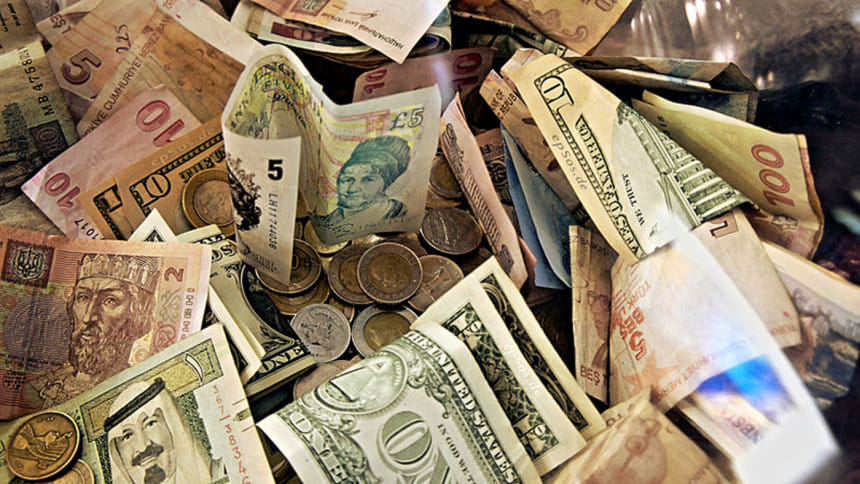
Banks in Bangladesh have decided to enforce a uniform exchange rate of the US dollar from next week with a view to moving away from multiple prices of the American greenback blamed for the ongoing foreign currency instability.

The move is part of the central bank's effort to embrace a market-based exchange rate in line with the conditions attached to the International Monetary Fund's $4.5 billion loan.

Yesterday, banks decided to buy the US dollar at Tk 109.50 and sell them at Tk 110 from the first working day of next week.

The Bangladesh Foreign Exchange Dealers Association (BAFEDA) and the Association of Bankers, Bangladesh (ABB) fixed the single exchange rate during a virtual meeting, which was attended by the leaders of the two associations.

Bangladesh Bank Chief Economist Md Habibur Rahman made a presentation at the meeting.

The uniform US dollar rate came at a time when the country's forex reserve continued to decline.

On August 30, the gross international reserves stood at $23.06 billion, according to the Bangladesh Bank, which began publishing foreign currency reserves as per the IMF's manual in July.

The reserves have fallen by about 25 percent in the past one year.

As of yesterday, the exchange rate was at Tk 109 per dollar for remittance, while it was Tk 109.50 for importers and Tk 108.50 for exporters as per a previous decision of the BAFEDA and the ABB.

As per the new decision, the exchange rate was revised upwards to Tk 109.50 per dollar for remitters and export bills and Tk 110 for importers.

The inter-bank exchange rate will be Tk 110 per dollar.

After the meeting, BAFEDA Chairman and Sonali Bank Managing Director Md Afzal Karim told The Daily Star: "This is a market-based exchange rate because we have fixed it after observing the market."

"If banks violate the rate, the central bank will take action against them."

Policy Research Institute Executive Director Ahsan H Mansur declined to accept the new rate as market-based.

He argued: "The dollar rate is Tk 118 in the kerb market and the real exchange rate is close to the kerb market."

A senior official of a private commercial bank who attended the meeting said the meeting also discussed the ongoing volatility in the forex market driven by higher import bills against moderate export and remittance earnings.

He said the uniform rate is close to the real effective exchange rate (REER), which stands at Tk 110.50 to Tk 111 per dollar.

The official said banks were asked to stop imposing multiple rates for remittances, export bills and importers in order to stabilise the foreign exchange market.

The meeting described hundi, a cross-border illegal money transfer system, as a major challenge.

"Banks have been asked to curb hundi."

Before the coronavirus pandemic, hundi cartels accounted for nearly half of remittance transfers to Bangladesh as the segment offered better US dollar rates than banks and other financial service providers.

Migrant workers sent $21.61 billion to Bangladesh in the just-concluded fiscal year.

The central bank is committed to implementing a unified and market-driven single exchange rate considering prevailing market conditions as per the conditions agreed with the IMF.

Introducing a single exchange rate system for exports, imports and remittances will be an automatic stabiliser against any external imbalances, said the BB in June in its monetary policy statement.

Centre for Policy Dialogue Executive Director Fahmida Khatun said the forex market mechanism could not work when the exchange rate is fixed.

"It is not a sustainable solution when the exchange rate is fixed artificially. We badly need a market-based exchange rate."

The economist called the falling trend of the reserve a major concern for the economy.

Fahmida Khatun said that the overdue foreign debt re-payment is another major concern.

PRI's Mansur warns that if the wide gap between the formal and informal exchange rates continues, remittance earnings through the formal sector will continue to fall.

"There will be a shortage of US dollars in the inter-bank market when remittance flow using the informal sector goes up."

The former official of the IMF said the local currency would have to be made attractive by hiking the interest rate.